



Urine Hormone Testing
This test looks at sex hormones and their metabolites, the overall diurnal pattern of free cortisol, and the total distribution of cortisol metabolites in addition to OATs, which provide insight into nutritional deficiencies, oxidative stress, gut dysbiosis, melatonin, neuroinflammation, and more.
Learn More 
Gut Microbiome Testing
The GI‑MAP (Microbial Assay Plus) is unique in the field of comprehensive stool testing.
Gut Microbiome Testing relies exclusively on quantitative polymerase chain reaction (qPCR) technology to detect parasites, bacteria, fungi, and more, by targeting the specific DNA of the organisms tested.
Learn More 
Food Sensitivities Test
The Mediator Release Test (MRT) is considered the highest standard of food sensitivity tests currently available. It’s a simple, patented blood test that identifies our body’s reactions to 140 foods and 30 food chemicals by measuring the number of mediators released and the subsequent changes in white blood cells.
Learn More 
Hormone Therapy for Women
Ladies, does the approach of your period fill you with dread due to severe cramps, unpredictable mood fluctuations, and bloating that hampers your productivity and has you yearning for the comfort of your bed?
Are you noticing more hair in your brush and a noticeably thinner ponytail without understanding the cause?
Learn More 
Hormone Therapy for Men
Testosterone levels generally peak during adolescence and early adulthood. As you age, your testosterone level gradually declines — typically about 1% a year after age 30 or 40. For older men, it's important to determine if a low testosterone level is due to normal aging or if it is due to a disease (hypogonadism)
Learn More 
Thyroid Testing
Unlike conventional medicine, we conduct an extensive thyroid panel, assessing TSH, Free T4, Free T3, reverse T3, TPO antibodies, and antiTG antibodies, to gain an understanding of your thyroid health.
We also explore potential underlying issues that might impact your thyroid hormone utilization, such as stress, inflammation, and digestive disturbances.
Learn More 
Female Cycle Mapping
For some women, testing reproductive hormones (progesterone, estrogen, etc.) on a single day is sufficient. In other scenarios, the clinical picture cannot be properly captured without “mapping” out the hormonal pattern throughout their menstrual cycle. The expected pattern of hormones shows relatively low estrogen levels early in the cycle, a surge around ovulation and modest levels in the latter third of the cycle (the luteal phase).
Learn More 
Peptides
Peptides are short chains of amino acids that our body naturally produces that optimize metabolic function. They act as signaling and messenger molecules within the body, instructing other cells and molecules on what functions to perform. There are over 7,000 known peptides in our bodies, and all these different peptides have a wide range of functions, including immune system health, repair, weight loss, improved cognitive function, libido, promoting healthy muscle growth and development, and many more
Learn More 
Stool Testing
A stool analysis is a series of tests done on a stool (feces) sample to help diagnose certain conditions affecting the digestive tract.
These conditions can include infection (such as from parasites, viruses, or bacteria), poor nutrient absorption, or cancer.
Learn More 
Genetic Testing
A Genetic Test (DNA test) is a medical test that can identify mutations in your genes, chromosomes or proteins.
Our Genetic Testing includes wellness profiles that provide valuable information about your physical endurance, injury recovery, food sensitivity, eating behavior & weight gain/loss pattern, and detoxification.
Learn More 
Blood Spot Testing
Sample Collection of the blood spots is a relatively simple and nearly painless procedure that can be done at home or by the health care practitioner.
A simple nick of the finger followed by placing blood drops on a filter card is all that is needed.
Learn More 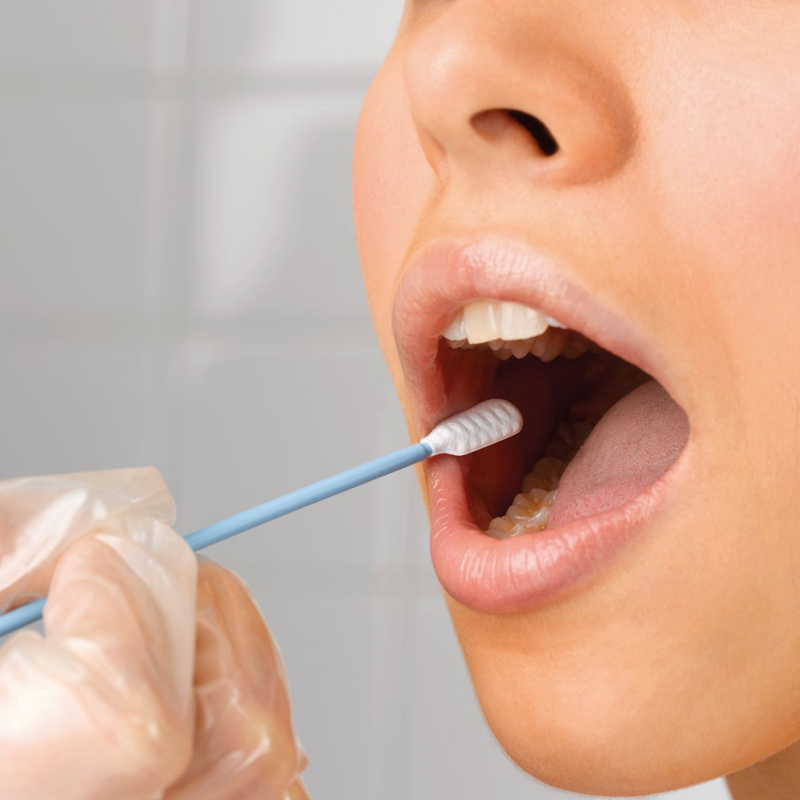
Saliva Testing
Saliva testing is a non-invasive collection method where patients collect their saliva in plastic tubes in order to measure hormones like cortisol, estrogens, progesterone, and androgens.
This non-invasive saliva collection is ideal for patients because it allows them to collect their sample in the privacy of their home or office.
Learn More